Alcohol
Alcohol is the most common drug used by people younger than 21 in the United States, often appearing at social gatherings, celebrations, or parties. While it may sometimes be viewed as a normal part of growing up, alcohol can have significant effects on youth health and development. Because the brain continues to develop into early adulthood, alcohol use during adolescence can affect areas related to memory, learning, decision-making, and emotional regulation. Drinking at a young age may also increase the risk of injuries, impaired judgment, and difficulties in school or relationships. Education and open conversations with trusted adults can help young people understand these risks and make informed choices. Communities, families, and schools all play an important role in promoting healthy environments where youth feel supported in choosing activities and lifestyles that protect their wellbeing. Young people who drink alcohol are more likely to develop certain physical and mental health conditions.
Prevalence of Lifetime Drinking
According to the 2024 National Survey on Drug Use and Health (NSDUH), 12.7 million people ages 12 to 20 (32.9% in this age group) reported that they have had at least one drink in their lives.
427,000 Asian people ages 12 to 20 (17.5% in this age group)
Consequences of Underage Alcohol Use
Underage drinking contributes to a range of immediate and lasting consequences, such as injuries, sexual assaults, alcohol overdoses, and death.
Alcohol is a factor in the deaths of thousands of people younger than age 21 in the United States each year. This includes:
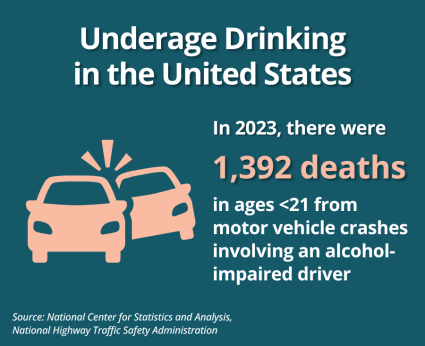
1,392 from motor vehicle crashes involving an alcohol-impaired driver (defined as having a blood alcohol concentration of 0.08 grams per deciliter)
978 from homicides
644 from alcohol-related poisoning (overdose), fall injuries, fire injuries, and drowning
615 from suicides
